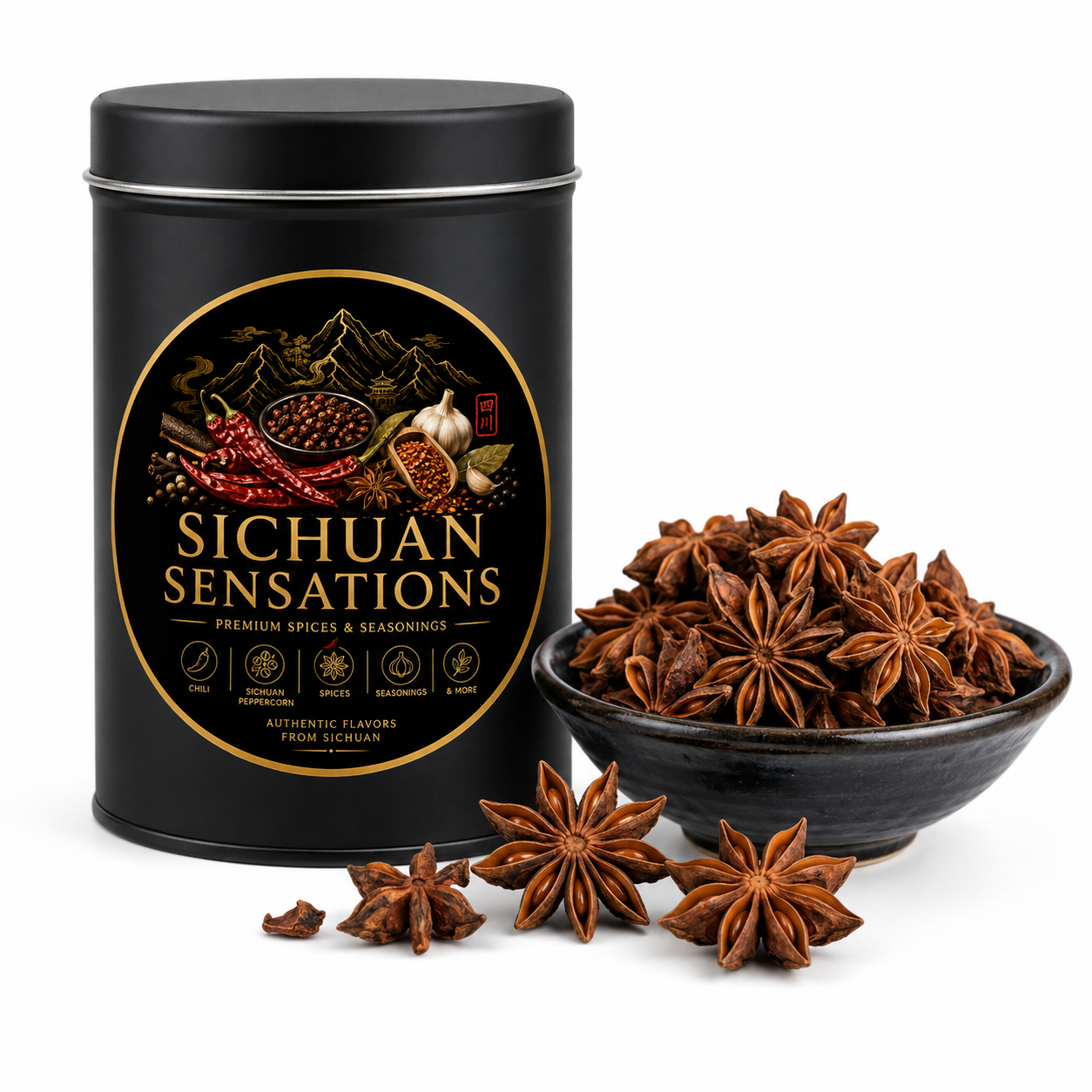
Chinese star anise is one of the foundational spices in Chinese braising and slow cooking. Known in Chinese as **ba jiao**, **da liao**, or **ba jiao hui xiang**, the dried fruit is instantly recognizable by its star-shaped form. Most pods have eight thick carpels, which explains the Chinese name “eight angles.”
The culinary species is *Illicium verum*. It delivers a concentrated sweet aroma often compared with aniseed or licorice, followed by gentle warmth and a lingering sweet-spicy finish. Used carefully, whole star anise can soften meaty aromas and give braised dishes, master stock, soups, cured-meat marinades, and Sichuan hot pot a deeper, more complete fragrance.
This guide explains how to identify good-quality whole star anise, how to use it without overpowering a dish, and why edible Chinese star anise must never be confused with toxic look-alike species.
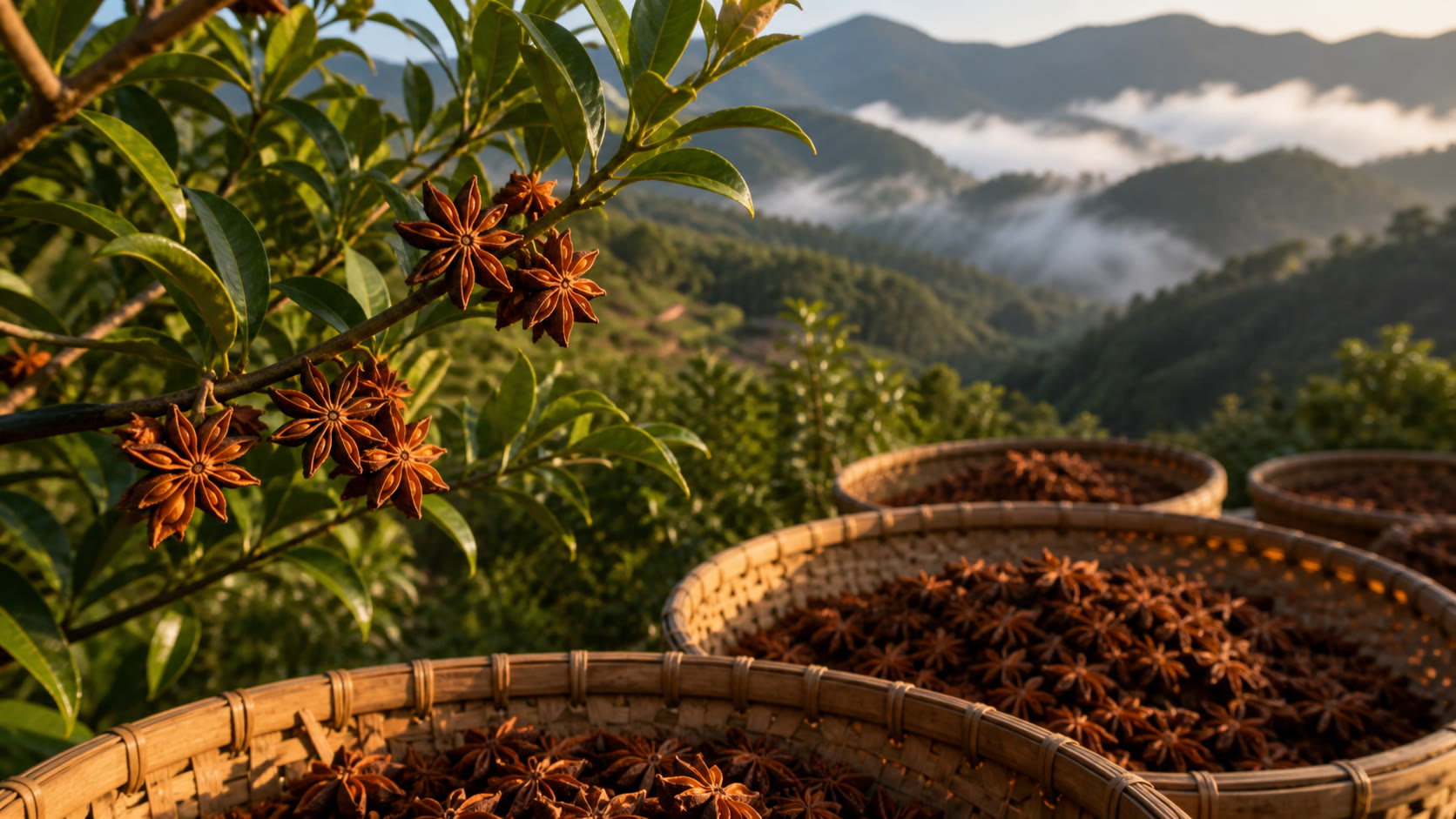
Chinese star anise is the dried fruit of an evergreen tree native to southern China and northern Vietnam. China’s leading growing areas include the mountain regions of Guangxi, with additional production in Yunnan and other warm southern provinces. Guangxi is especially important to the modern star-anise industry because its subtropical mountain climate supports large-scale cultivation of aromatic pods.
Star anise is not the same plant as common anise seed. They share a similar aroma because both contain anethole, but common anise comes from the parsley family, while Chinese star anise comes from the *Illicium* genus.
In Chinese cooking, star anise is not normally eaten whole. It is simmered as an aromatic and removed before serving, much like a bay leaf or a piece of cassia bark.
Appearance
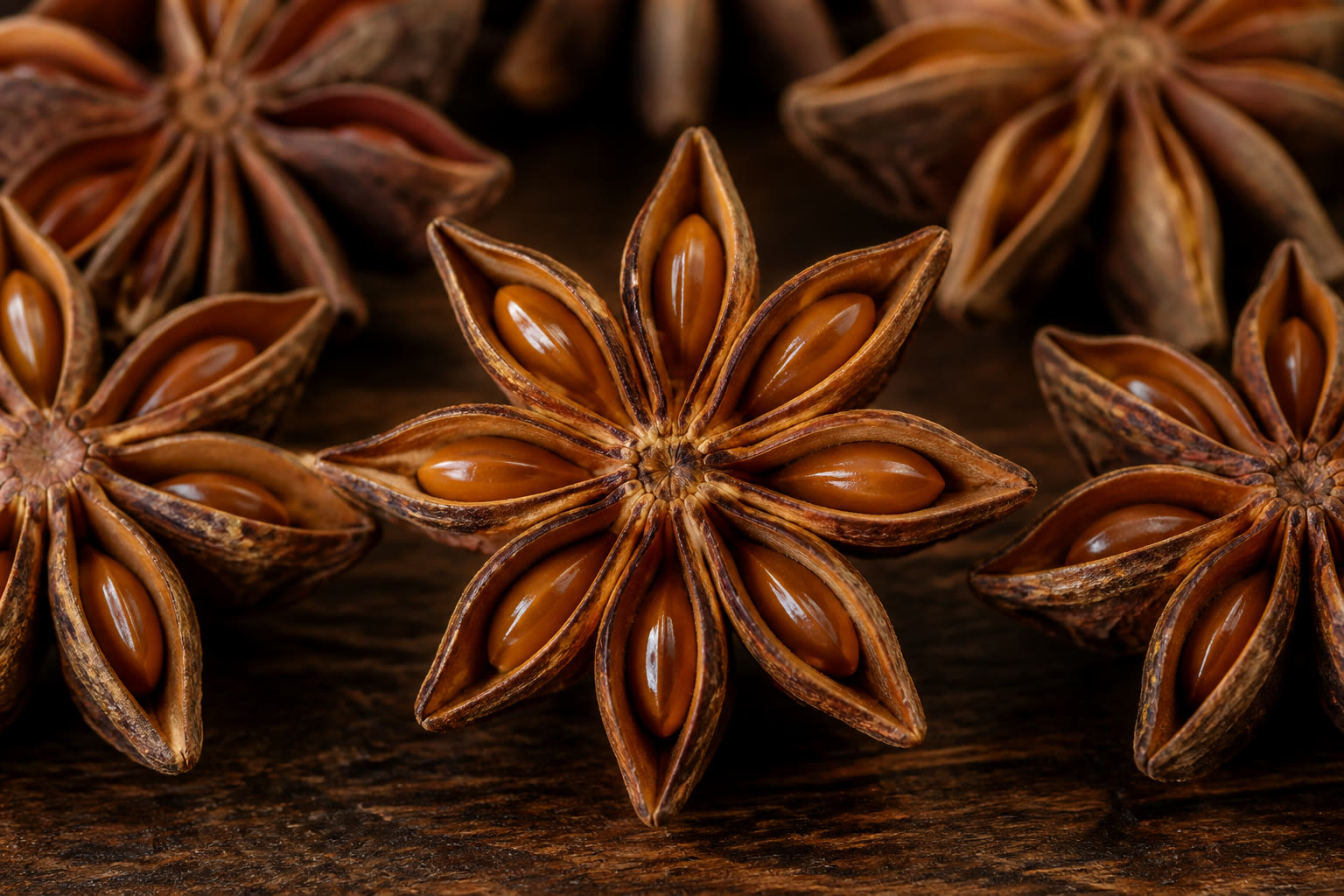
Good dried Chinese star anise has a red-brown to chestnut-brown color and a well-formed star shape. The carpels should look broad, thick, and plump rather than thin and brittle. A light natural oiliness on the shell is desirable, and intact pods may hold smooth, full seeds. Look for high wholeness with fewer broken tips, fragments, dust, or unrelated plant material.
Although eight points are common, natural edible pods do not always have exactly eight. Shape alone is therefore a quality clue, not a reliable species-authentication test.
Aroma
The fragrance should be strong, sweet, and clean, with the rounded scent associated with aniseed or licorice. When a pod is gently broken, the aroma should become more obvious. Dull, musty, sour, or strangely sharp odors may indicate age, poor storage, or unsuitable material.
Flavor
Star anise has a sweet-spicy profile with a gentle warming finish. It should add sweetness and aromatic depth without obvious bitterness or harsh astringency. Because the flavor is concentrated, one or two whole stars are often enough for a family-sized pot.
The woody carpels release aroma gradually in hot liquid and fat. This makes whole star anise especially effective in long, moist cooking, where its sweet fragrance has time to spread through meat, stock, and sauce.
Best Uses
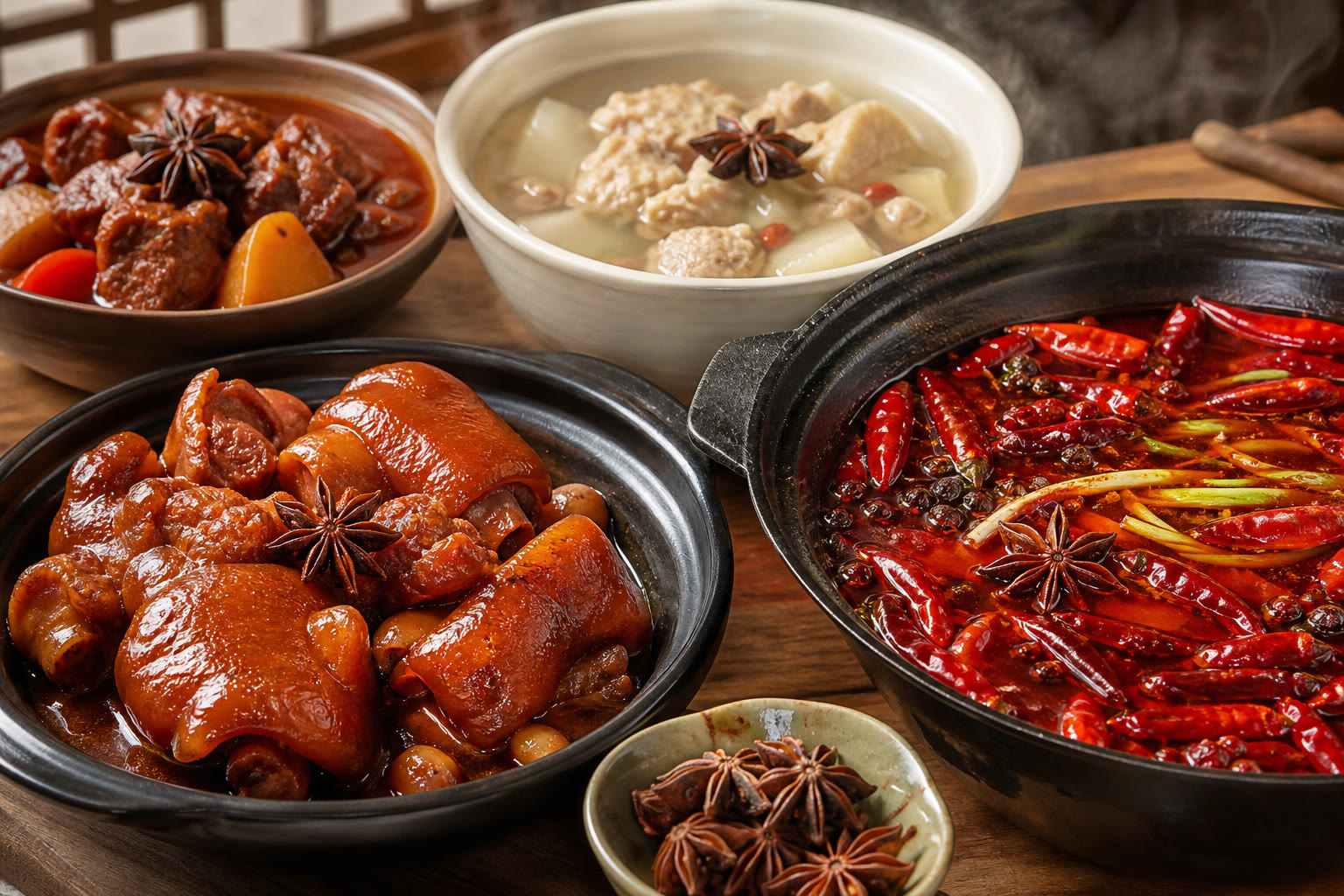
- Chinese master stock and luwei:** Add star anise with cassia bark, bay leaves, cloves, dried chilies, and Sichuan peppercorns.
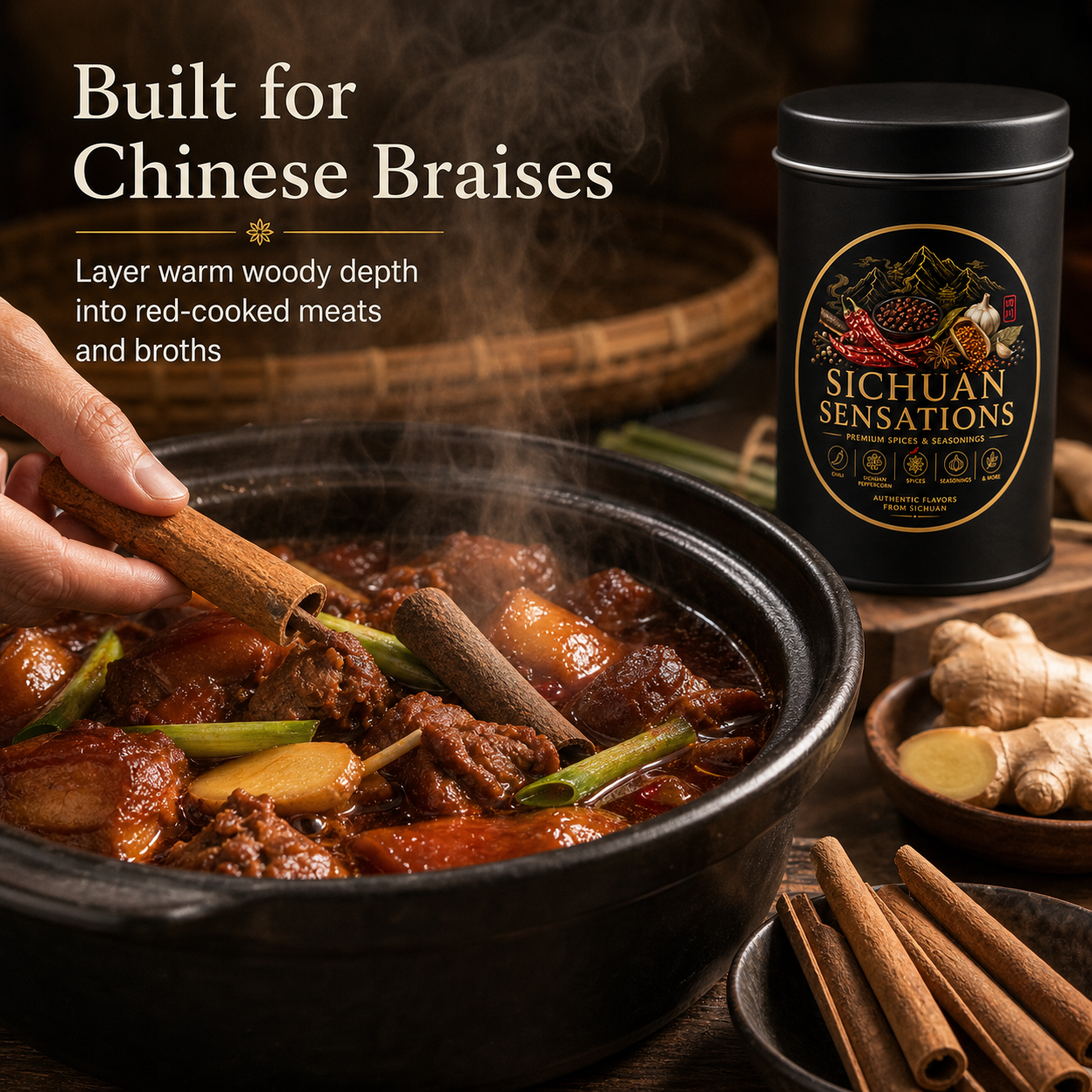
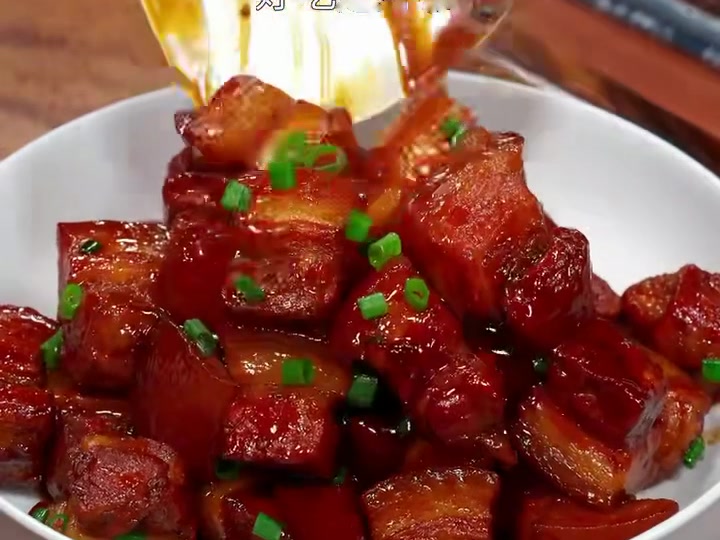
- Braised beef, pork, or poultry:** One or two stars round out soy sauce, rock sugar, ginger, and cooking wine.
- Soups and broths:** Use a small amount to provide background warmth rather than a dominant licorice note.
- Sichuan hot pot base:** Star anise supports beef tallow, chili, fermented broad-bean paste, and other whole spices.
- Cured-meat marinades:** A restrained amount gives sausages and preserved meats a familiar Chinese aromatic character.
- Chinese five-spice blends:** Star anise is commonly paired with fennel, cassia, cloves, and Sichuan peppercorn.
Add whole pods early for a long braise. For a shorter sauce, lightly crack one point to speed up extraction. Remove the pods before serving, and avoid adding too many: excess star anise can make a dish taste medicinal or overly sweet.
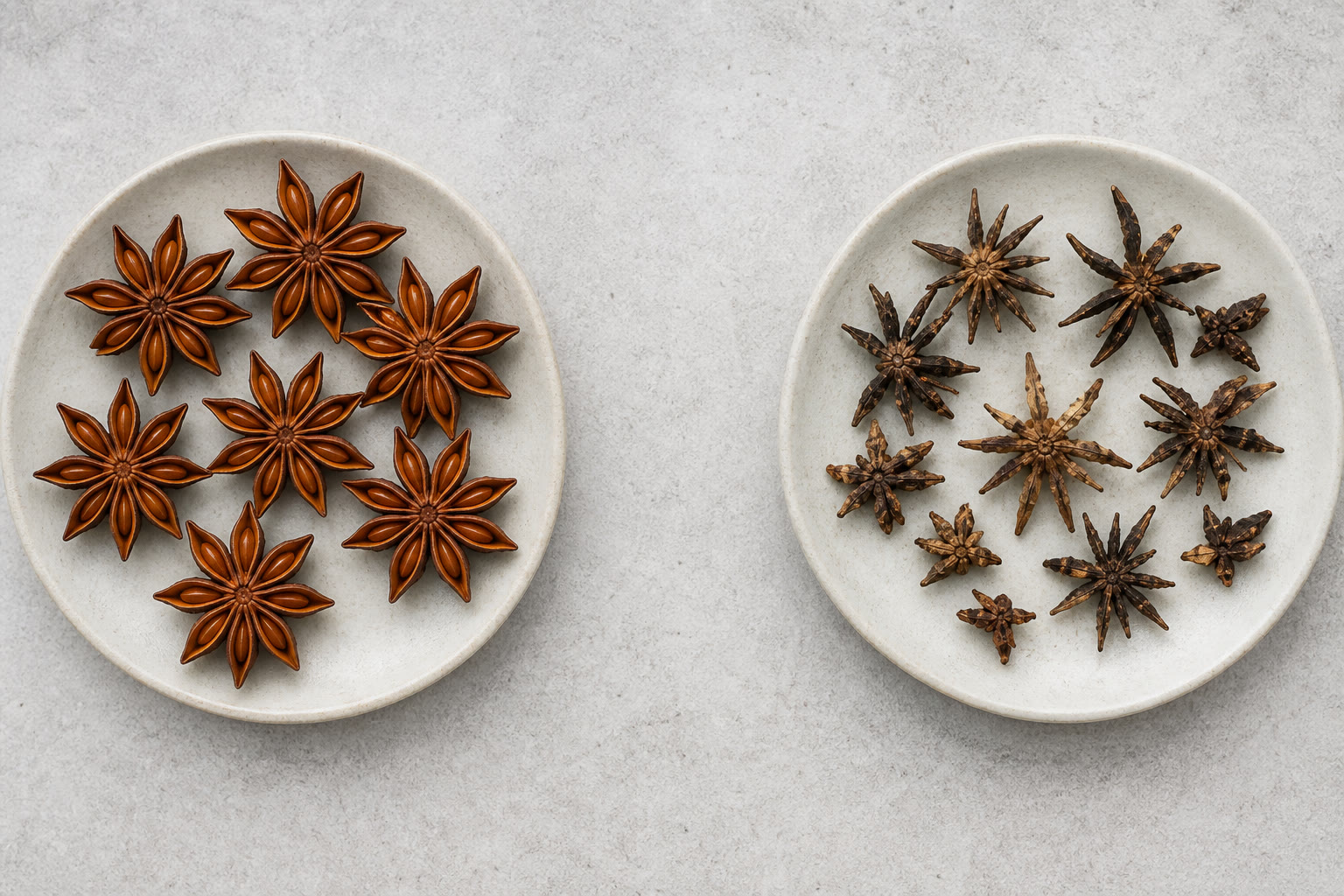
Only properly identified **Chinese star anise (*Illicium verum*)** should be used as food. Several related *Illicium* species are not culinary spices, and Japanese star anise (*Illicium anisatum*) is toxic.
Edible Chinese star anise is often described as plump, broad, regular, and sweet-smelling, while suspicious wild pods may look thinner, more irregular, sharply pointed, or smell harsh. However, appearance and smell alone cannot guarantee identification because related species can be very similar.
For safety:
1. Buy sealed, food-grade star anise from a reputable spice supplier.
2. Check that the product is labeled Chinese star anise or *Illicium verum*.
3. Never cook with decorative, foraged, ornamental, or unidentified star-shaped pods.
4. Discard products with an abnormal odor, unclear origin, or contamination concerns.
5. Do not use star-anise tea as a home remedy for infants or medical conditions.
Keep whole star anise in an airtight container away from direct sunlight, steam, and stove heat. Whole pods hold their fragrance longer than ground spice because less surface area is exposed to air.
Buy an amount you can use while the aroma remains strong. If a pod smells faint even after being broken, it may no longer provide much flavor. Grind only what you need, because star-anise powder loses aroma faster and is easier to overuse.
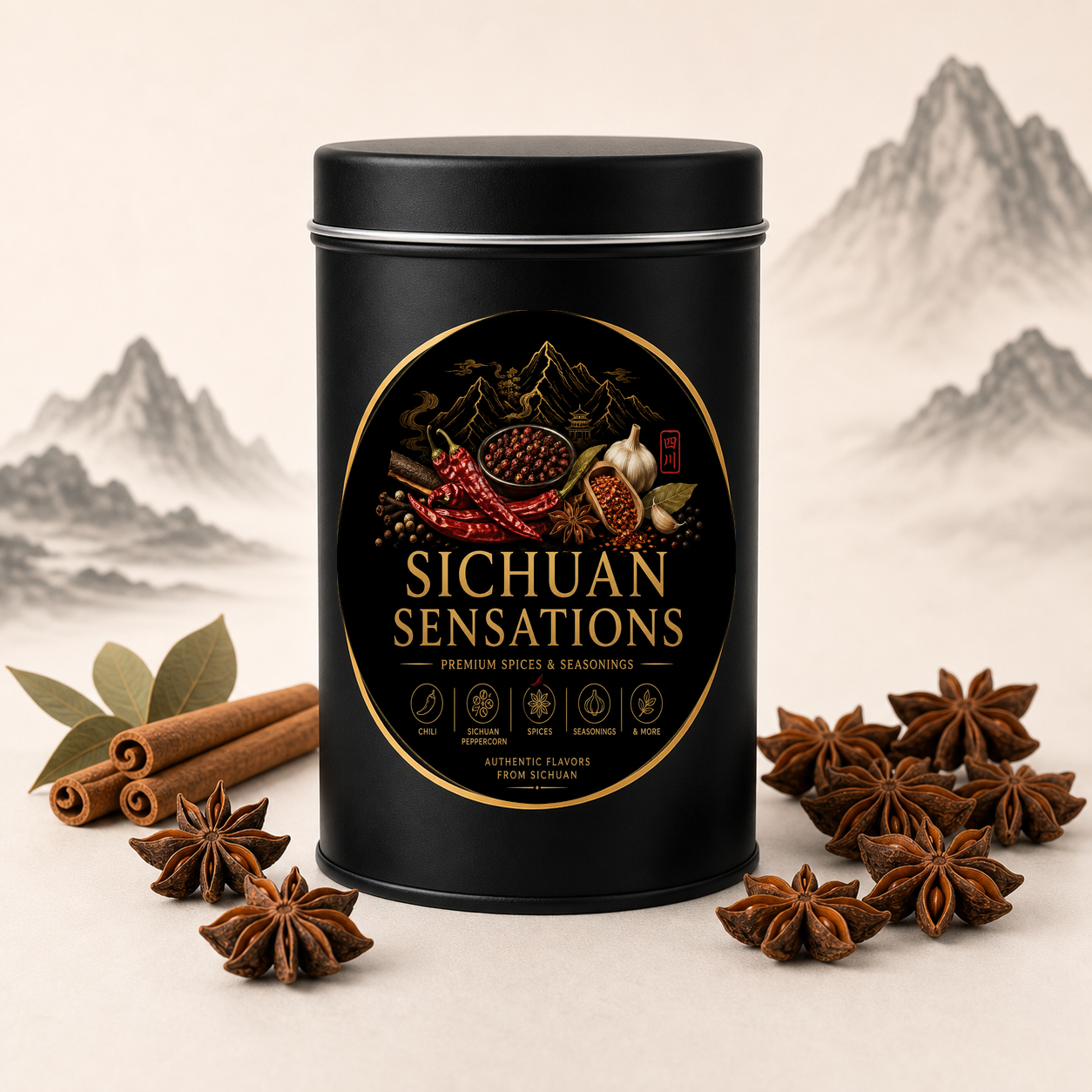
[Sichuan Sensations Whole Star Anise](/products/sichuan-sensations-whole-star-anise) features whole aromatic pods for braises, broths, stews, hot pot base, and Chinese spice blends. Start with one whole star in a family-sized pot, taste as the dish develops, and add more only when needed.
**Short product benefit:** Natural whole Chinese star anise with thick, aromatic pods and a rich sweet fragrance—an essential spice for luwei, red braises, and hot pot.
Is star anise the same as anise seed?
No. They are different plants, although both contain aromatic compounds that create a similar licorice-like scent.
How much star anise should I use?
For a family-sized braise or soup, begin with one whole star. Use two for a large or strongly flavored pot. It is easier to add more aroma than to remove an overpowering flavor.
Can I eat the whole pod?
It is normally simmered for flavor and removed before serving. The woody carpels and hard seeds are not pleasant to chew.
When should star anise be added to a braise?
Add whole pods near the beginning so their sweet aroma can develop slowly. Remove them before serving.
Is Japanese star anise safe to eat?
No. Japanese star anise is toxic and is not a culinary spice. Purchase food-grade Chinese star anise labeled *Illicium verum* from a trusted supplier.