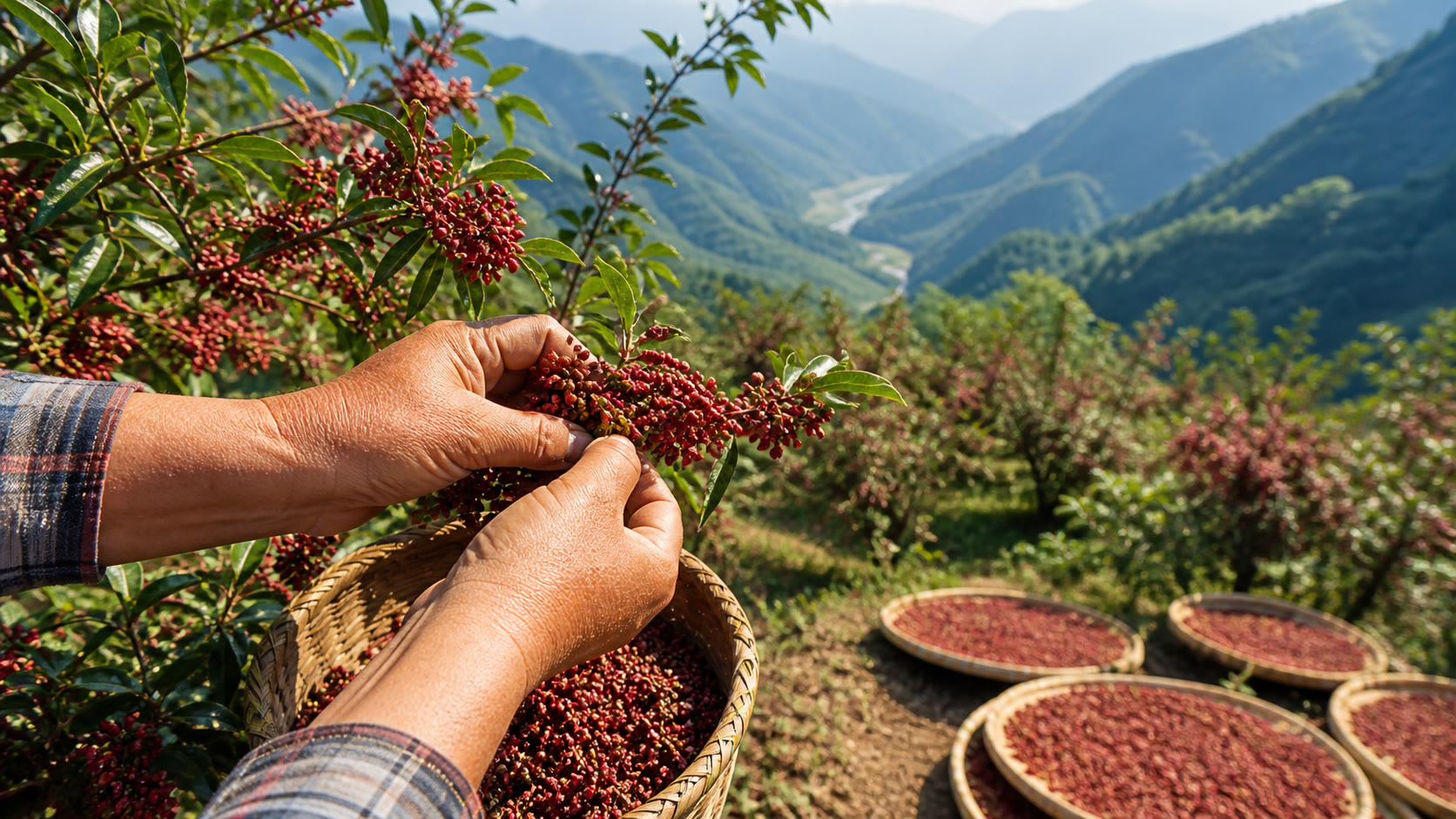
If Sichuan cuisine has a signature sensation, it is **mala**: the fragrant partnership of chili heat and the bright, tingling character of Sichuan peppercorns. Among China’s best-known peppercorn origins, Hanyuan County in Sichuan holds a special place. Hanyuan peppercorn was historically called *li jiao* and later became known as *gong jiao*, or “tribute pepper,” after it was supplied to the imperial court.
With more than 2,000 years of cultivation history and protected geographical-indication status, Hanyuan Sichuan peppercorn is valued for much more than numbness. Its appeal lies in layered aroma, clean flavor, full husks, and a tingling finish that develops gradually rather than simply overwhelming the palate.
This guide explains what makes Hanyuan peppercorn distinctive, how red and green Sichuan peppercorns differ, what to look for when buying whole peppercorns, and how to use each variety in authentic Sichuan cooking.
Hanyuan’s relationship with peppercorn cultivation reaches back more than two millennia. Historical accounts describe the spice as an important local product long before modern Sichuan cuisine took shape. From the Tang dynasty onward, Hanyuan peppercorn was formally presented as an imperial tribute, which is why it is still called **gong jiao** today.
In 2005, Hanyuan pepper received national geographical-indication product protection in China. This recognition connects the name not only with a type of spice, but also with a defined place, a long cultivation tradition, and quality characteristics shaped by that origin.
For cooks, the history matters because it explains why Hanyuan peppercorn is treated as an origin ingredient rather than a generic seasoning. Like tea, coffee, or wine, peppercorn aroma changes with variety, growing conditions, harvest, drying, sorting, and storage.
Hanyuan lies in a high-mountain river-valley landscape in western Sichuan. Abundant sunshine, noticeable day-to-night temperature changes, and sandy, mineral-rich soils help the peppercorn husks accumulate volatile aromatic oils. These oils are concentrated in the small raised glands visible on the surface of a good peppercorn husk.
The result is an origin style often described as **large-grained, oil-rich, deeply aromatic, and cleanly numbing**. When quality peppercorns are gently rubbed between warm fingers, their citrus, woody, floral, or green herbal notes should become easy to smell and should linger rather than disappear immediately.
This is also why freshness matters. Old peppercorns may still look intact, but their color becomes dull and their aromatic oils fade. A well-sealed package stored away from heat, moisture, and direct light helps preserve the character that makes Hanyuan peppercorn special.

Appearance
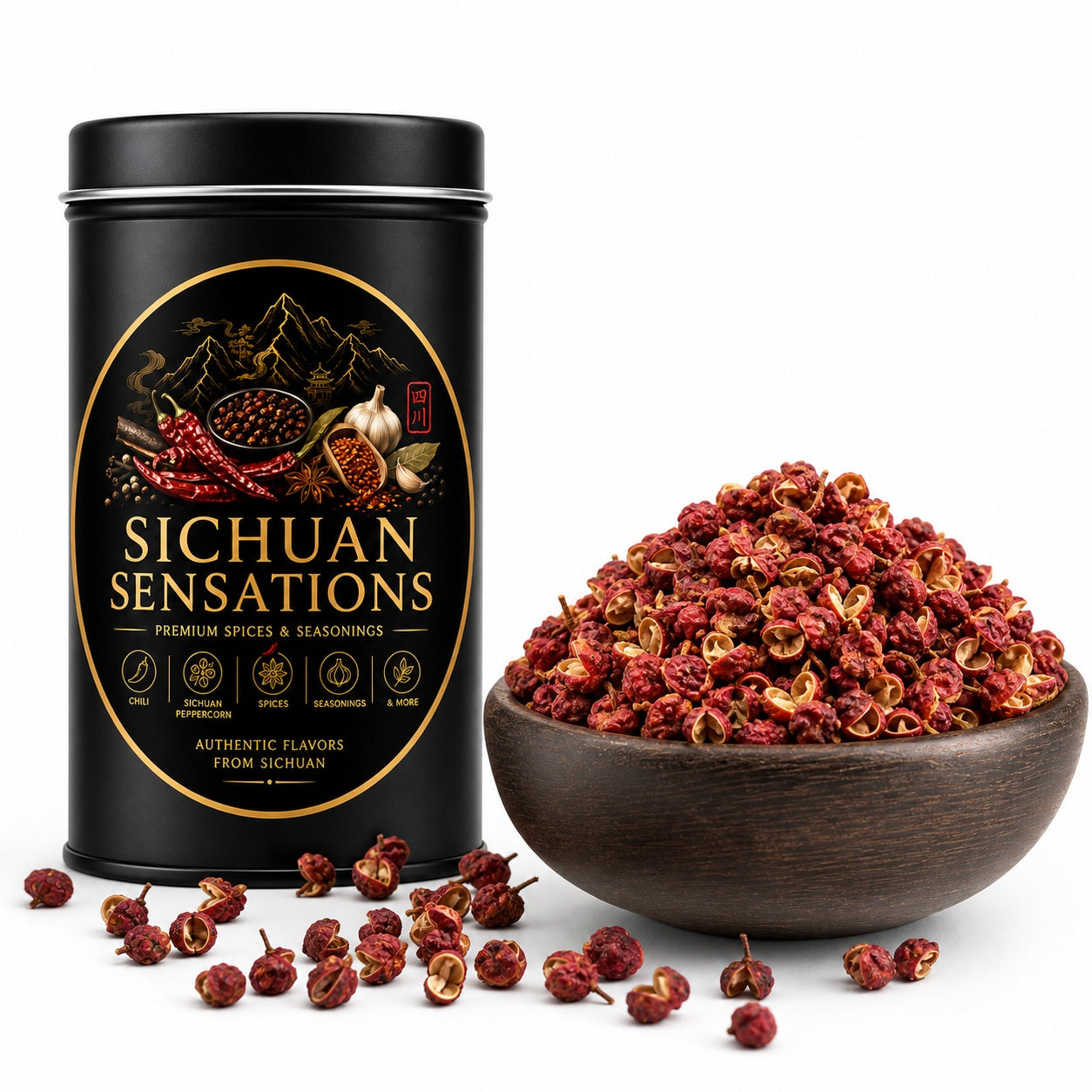
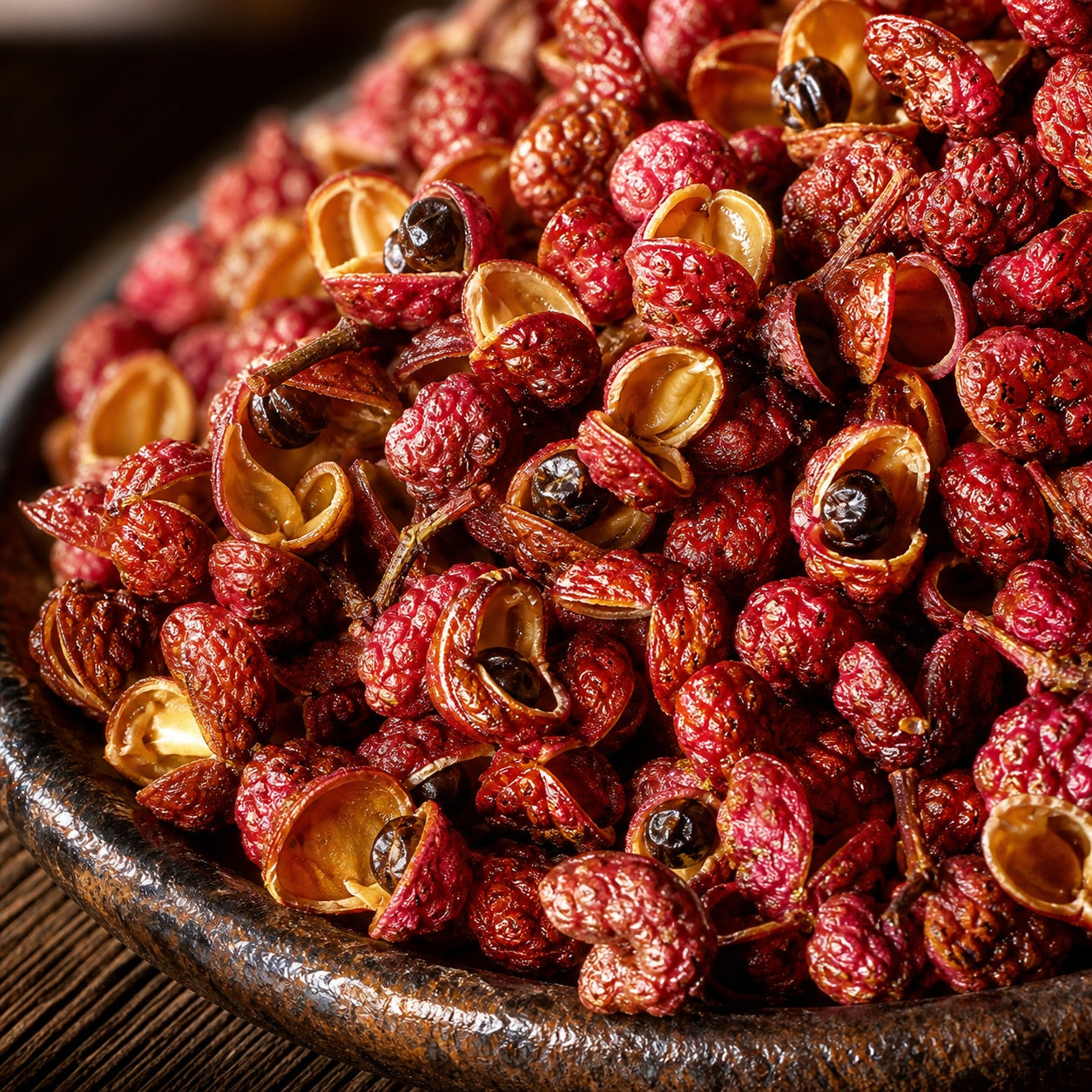
Premium Hanyuan red Sichuan peppercorns have plump, open husks with a rich jujube-red to reddish-brown color. The surface oil glands should look raised and well developed. The pale inner surface is usually clean, while unwanted stems, dust, and hard black seeds should be limited.
One traditional visual clue is the **“mother-and-child peppercorn”** cluster, called *zimu jiao* or *wawa jiao* in Chinese. A larger peppercorn may remain attached to one, two, or three smaller peppercorns near the stem. This feature can be a useful origin-style clue, although it should not be treated as the only proof of authenticity.
Aroma and Tingling Sensation
Red Hanyuan peppercorn is known for an aroma-first profile. It can show ripe citrus-peel notes, warm wood, and a deeper floral fragrance. The tingling sensation is rounded and gradual: fragrant before aggressively numbing, mellow rather than harsh, and long-lasting without an unpleasant bitter or throat-catching finish.
Best Uses
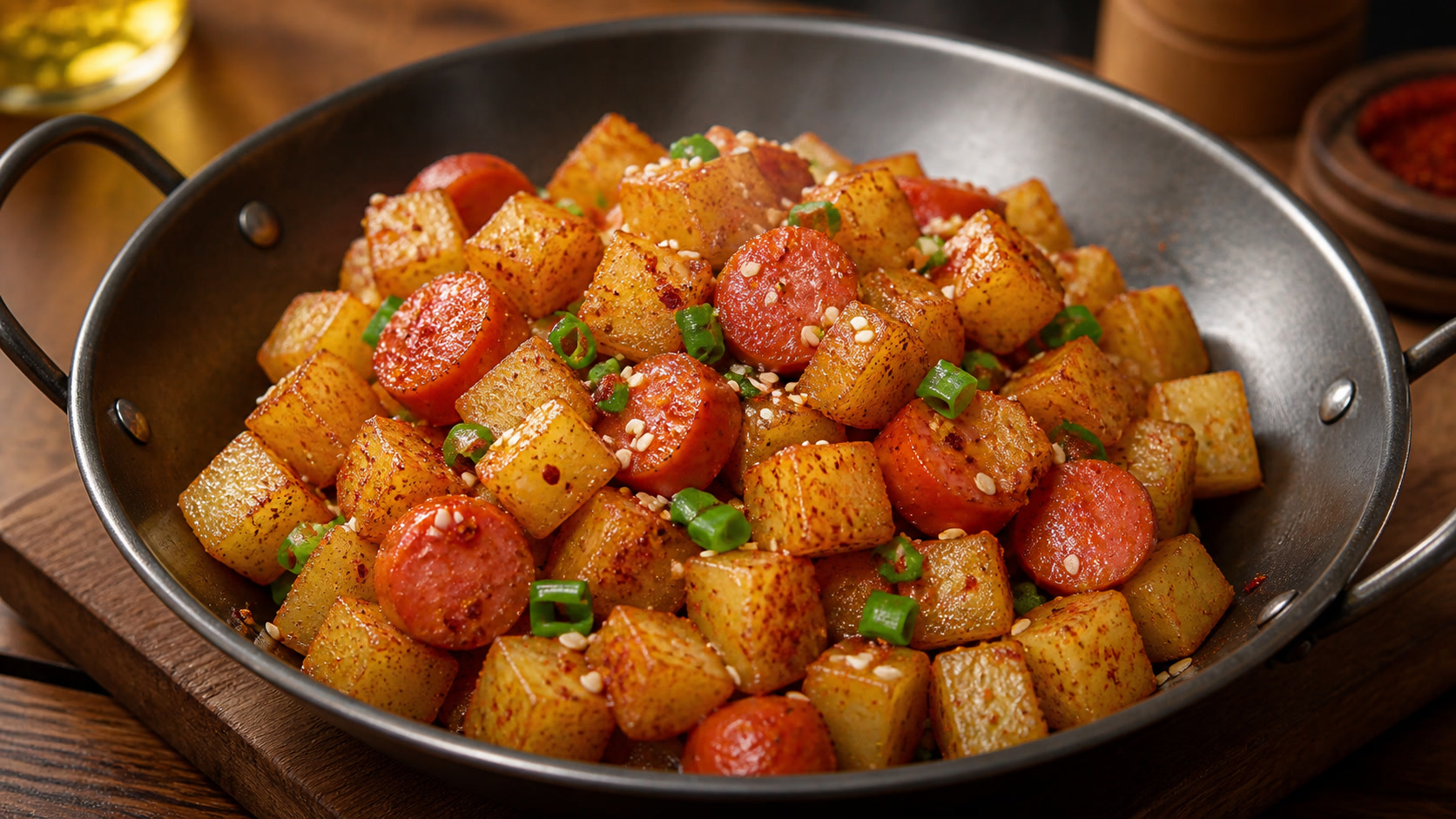
Red Sichuan peppercorn tolerates sustained heat well, making it a strong choice for hot pot base, braised meat, luwei brines, red-braised dishes, stir-fries, cured-meat marinades, chili oil, and ground hua jiao powder. In longer cooking, add whole peppercorns to the oil, broth, or spice bag so their warm aroma can develop gradually.
Green Sichuan peppercorns offer a different expression of mala. The dried husks should retain a natural green to olive-green tone, with thick walls and densely raised oil glands. Their aroma is fresher and more direct, combining citrus peel with green herbs and a lively botanical note.
The tingling sensation usually arrives faster and feels brighter than the rounded warmth of red peppercorn. This makes green peppercorn especially suitable for dishes where a clean, fresh burst of aroma should remain noticeable at the table.
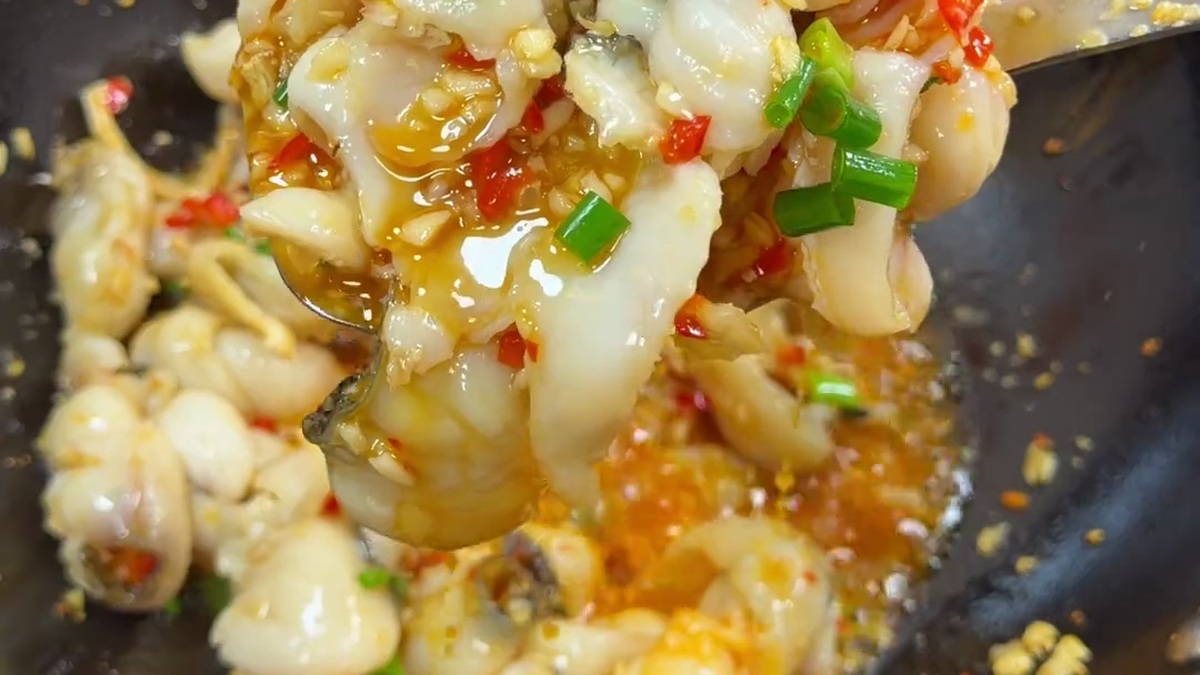
Use green Sichuan peppercorn in boiled fish, green-peppercorn chicken, mao xue wang, cold dishes, dipping sauces, seafood, and peppercorn oil. For the freshest result, bloom it briefly in hot oil or add it near the end of cooking. Excessive high heat or a very long simmer can mute its delicate green aroma.
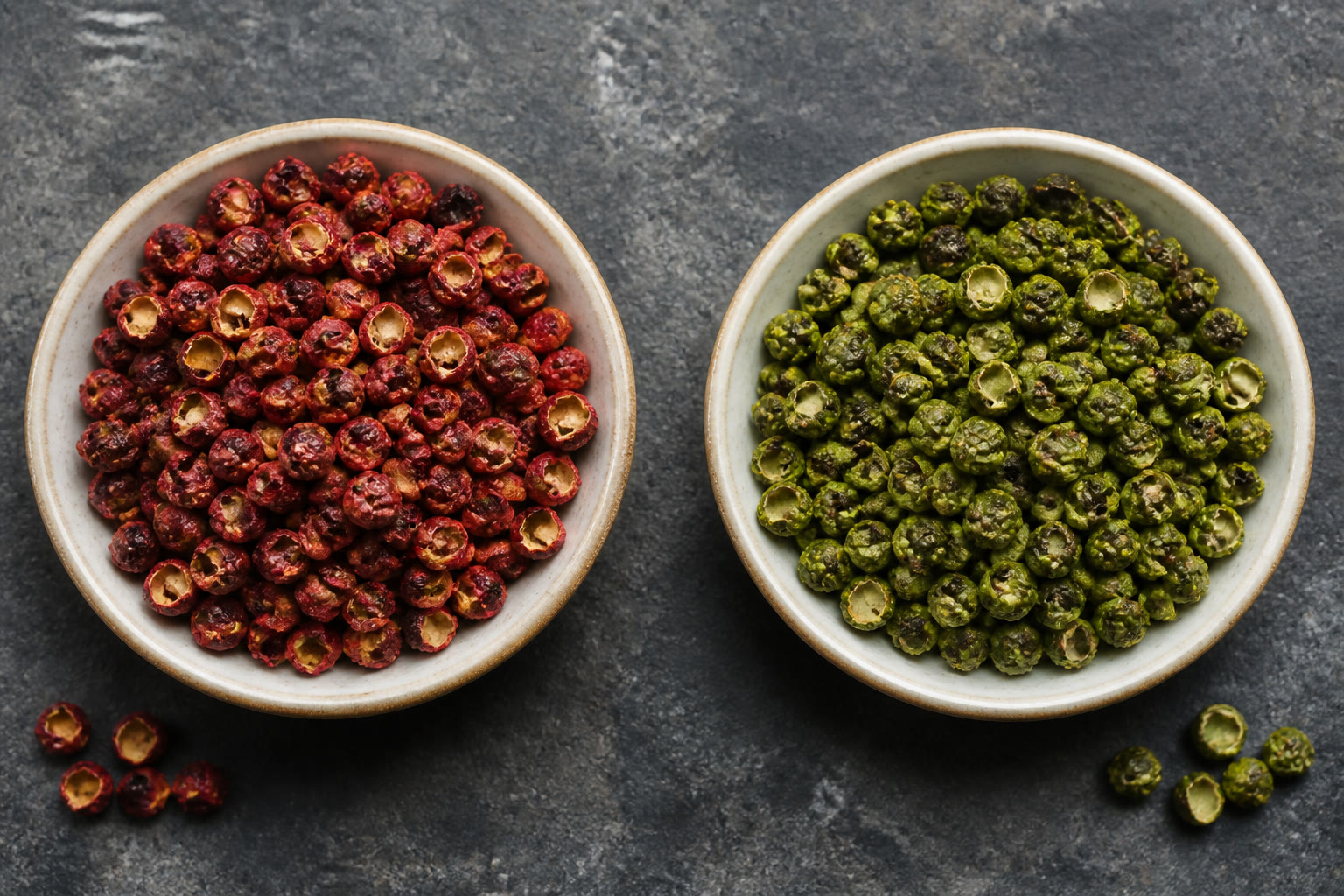
| Feature | Red Sichuan Peppercorn | Green Sichuan Peppercorn |
| Color | Jujube red to reddish brown | Green to olive green |
| Main aroma | Warm citrus, woody, floral | Fresh citrus, herbal, green |
| Tingling style | Rounded, gradual, long finish | Faster, brighter, more direct |
| Heat tolerance | Better suited to longer cooking | Best with brief heating or late addition |
| Best dishes | Hot pot, braises, luwei, stir-fries, marinades | Boiled fish, chicken, seafood, cold dishes, peppercorn oil |
| Chinese search name | Hong hua jiao / red hua jiao | Qing hua jiao / green hua jiao |
Neither variety is universally “better.” Choose red peppercorn when you want warm depth and a long-cooked mala foundation. Choose green peppercorn when you want a fresher aroma and a more immediate tingling lift. Many Sichuan cooks keep both and use them for different flavor structures.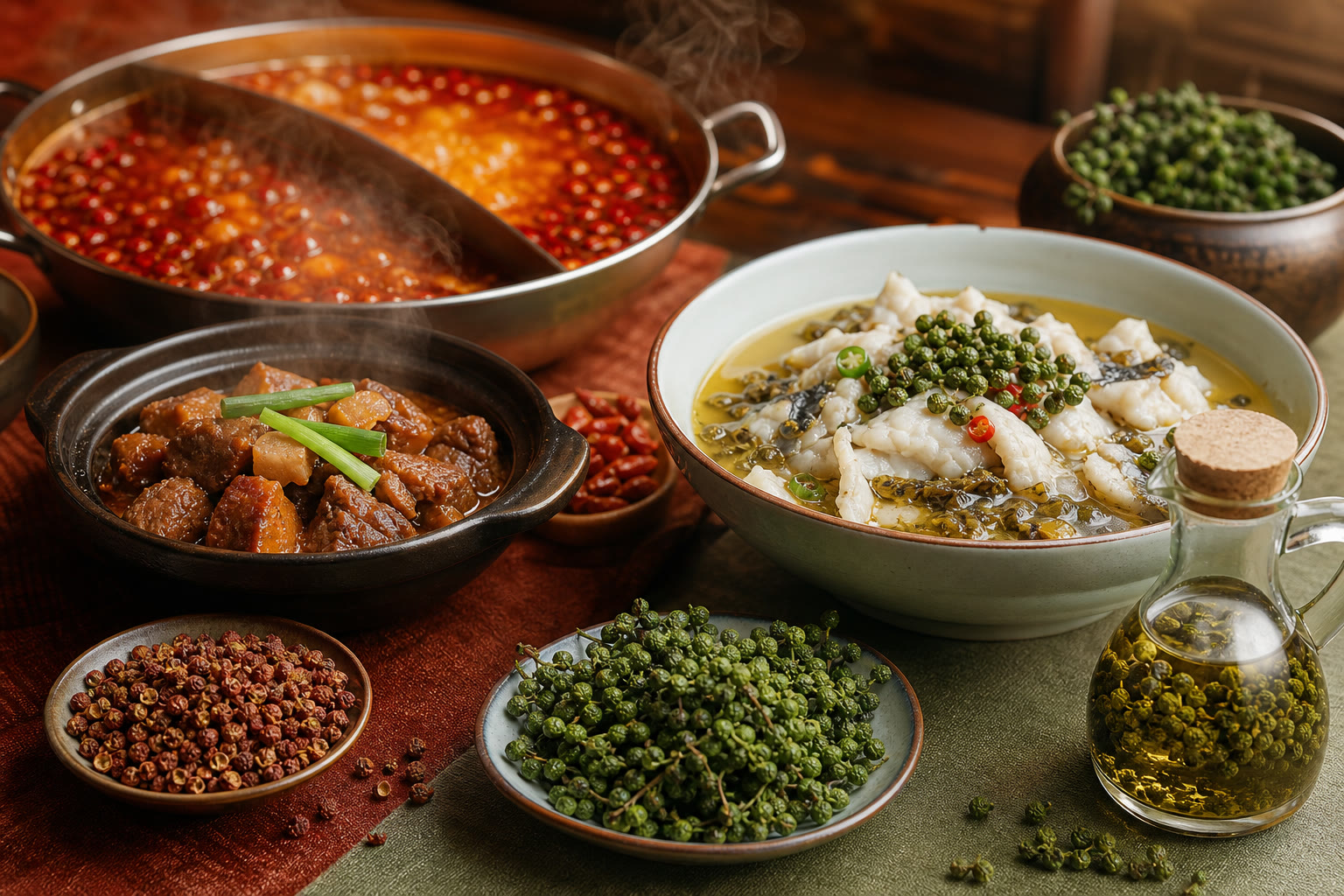
When buying whole Sichuan peppercorns online or in a spice shop, use more than one quality signal:
1. Look for lively color.** Red peppercorns should not appear uniformly dark brown; green peppercorns should not look gray or faded.
2. Check the husks.** Plump, open husks with visible raised oil glands usually indicate better maturity and aroma.
3. Prefer fewer hard black seeds.** The aromatic part is primarily the husk. Too many glossy black seeds add weight but little useful fragrance and can feel gritty.
4. Smell before judging numbness.** Good peppercorns should release a clear aroma even before cooking.
5. Check cleanliness.** A carefully sorted product should contain fewer stems, leaves, dust, and broken foreign material.
6. Buy a quantity you can keep fresh.** Whole peppercorns retain aroma better than powder, but they still lose volatile oils after repeated exposure to air.
After opening, keep the peppercorns in an airtight container in a cool, dark, dry cupboard. For longer storage, divide them into smaller sealed portions so the full supply is not exposed every time you cook. Toast only the amount you need, and use gentle heat—burnt Sichuan peppercorn becomes bitter.
For a classic warm, woody mala foundation, try [Sichuan Sensations Red Sichuan Peppercorns](/products/red-sichuan-peppercorns-whole-hua-jiao). Their whole husks are a versatile pantry choice for hot pot, braises, luwei, stir-fries, chili oil, and marinades.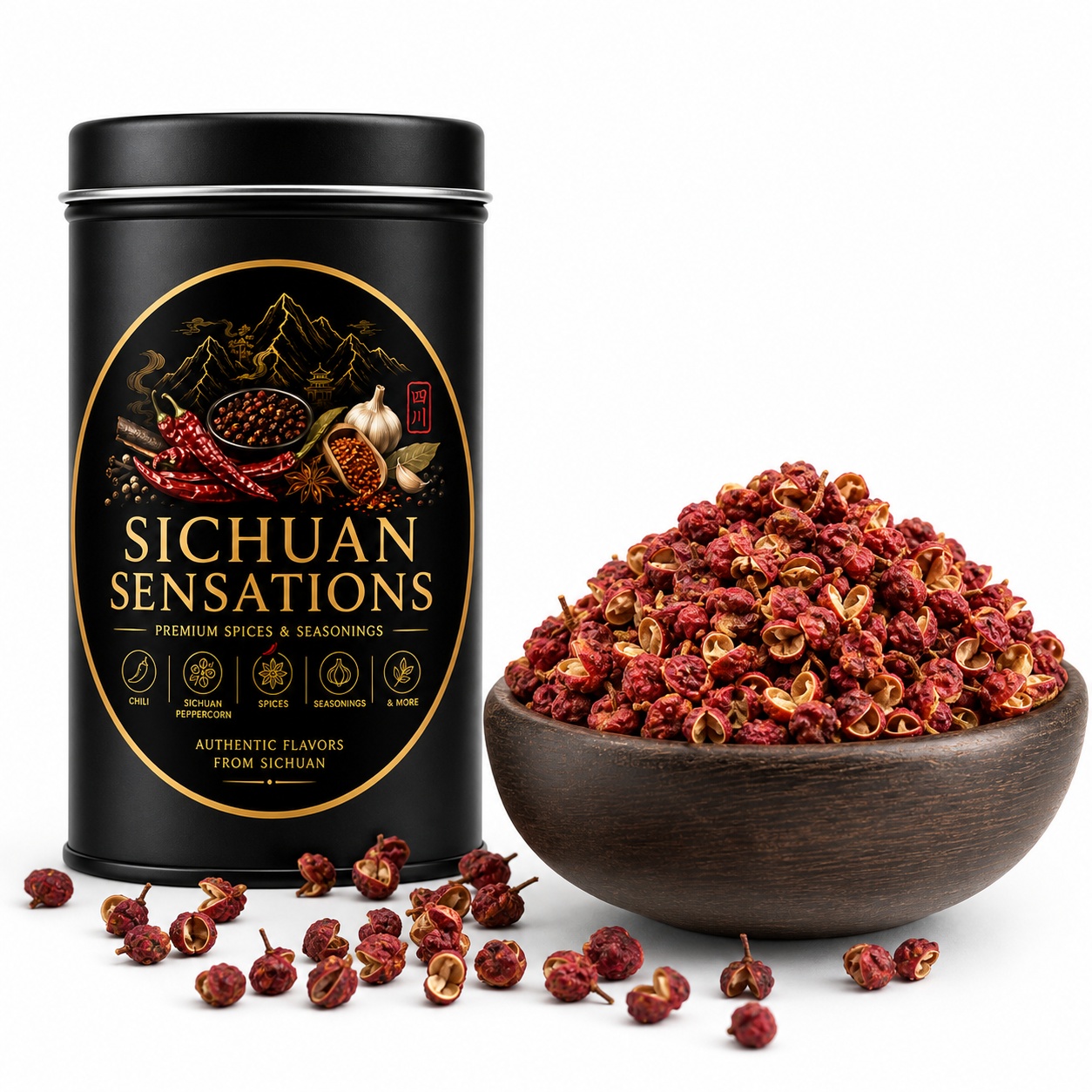
When you want a brighter citrus-herbal aroma and a faster fresh tingle, use [Sichuan Sensations Green Sichuan Peppercorns](/products/green-sichuan-peppercorns-whole-qing-hua-jiao). Bloom them briefly for boiled fish, chicken, seafood, cold dishes, dipping oil, and contemporary mala sauces.
Together, red and green peppercorns let you build mala with greater precision: red for depth and warmth, green for lift and freshness.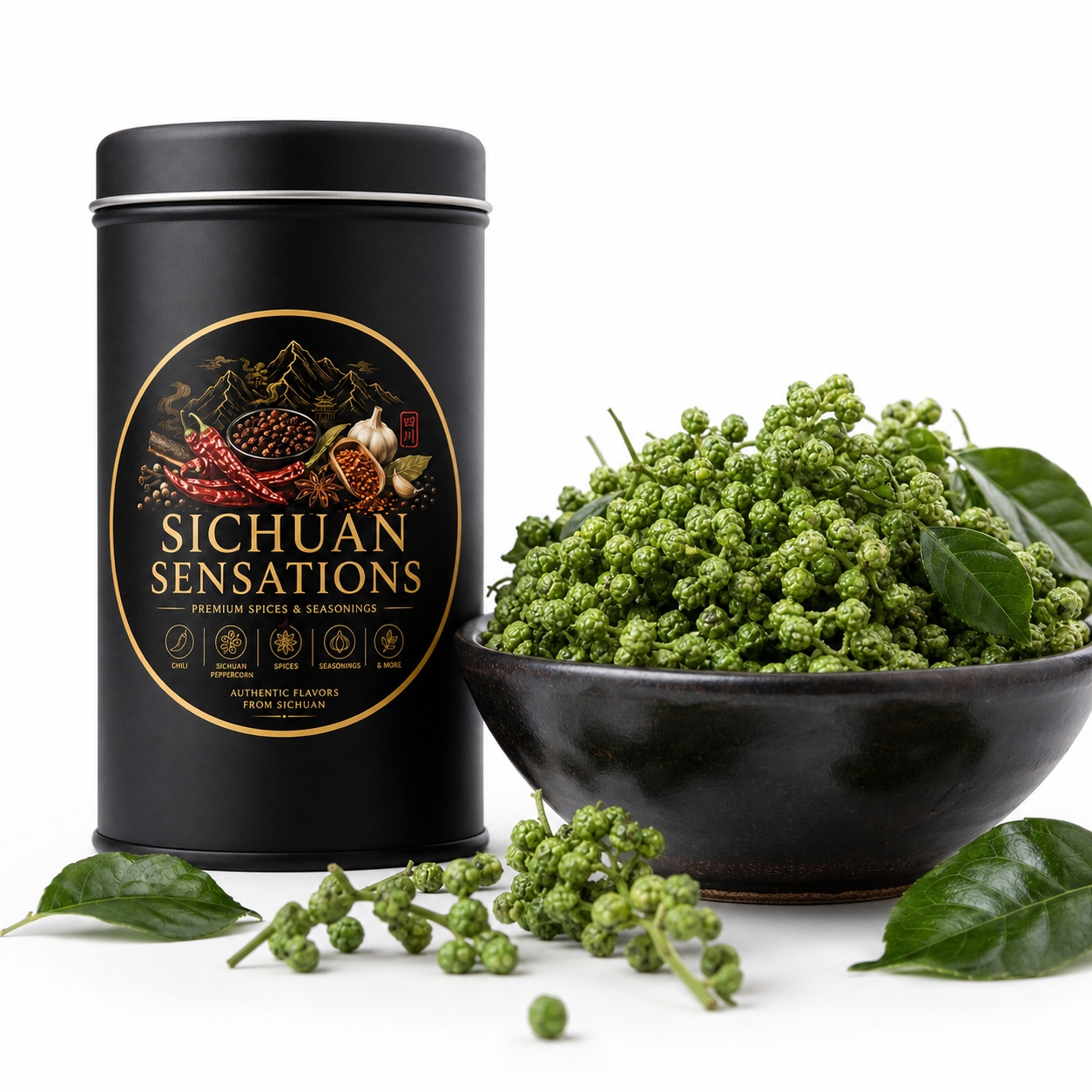
Is Sichuan peppercorn the same as black pepper?
No. Sichuan peppercorn comes from the aromatic husks of plants in the *Zanthoxylum* family. Black pepper comes from *Piper nigrum*. Sichuan peppercorn is prized for citrus-like aroma and a tingling sensation rather than the sharp peppery heat of black pepper.
What does “hua jiao” mean?
*Hua jiao* is the common Chinese name for Sichuan peppercorn. Red peppercorn may be called *hong hua jiao*, while green peppercorn is often called *qing hua jiao*.
Can I grind whole Sichuan peppercorns?
Yes. Remove hard black seeds and stems, toast the husks gently until fragrant, let them cool, and grind only the amount needed. Freshly ground peppercorn is usually more aromatic than powder stored for a long time.
Which Sichuan peppercorn is best for mapo tofu?
Red Sichuan peppercorn is the classic choice for a warm, rounded mala profile. Green peppercorn can be added in a smaller amount when you want a fresher, brighter finish.
|
 |
|
 |